
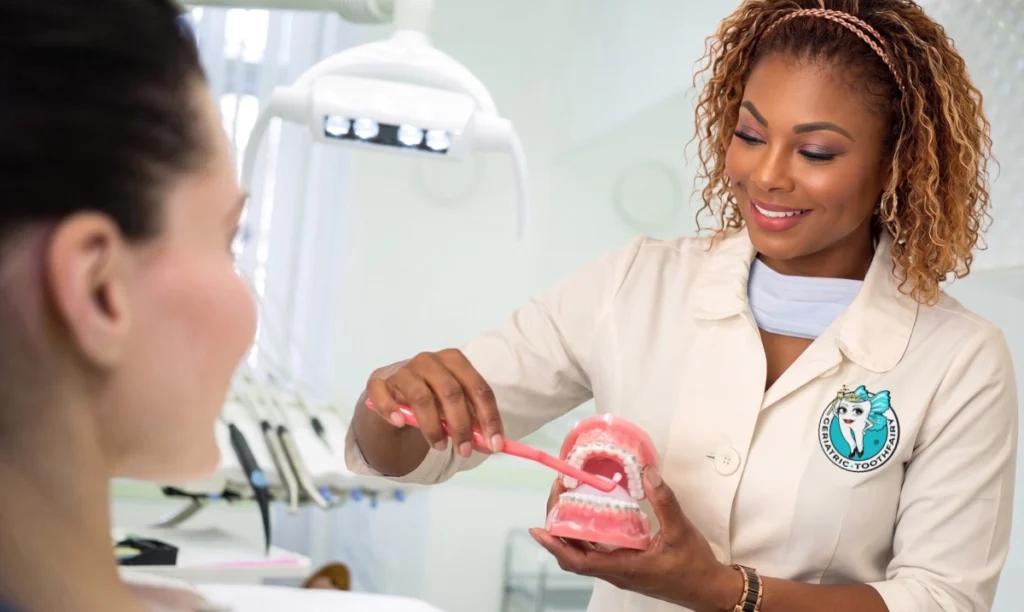
Caring for older adults teaches us something very quickly. Oral health is never just about teeth. It is about comfort and dignity. It is about the ability of someone to enjoy a meal, smile without pain, speak clearly, or feel safe in their own body.
I have seen caregivers carry enormous responsibility while trying to manage medications, bathing, mobility support, memory challenges, and daily hygiene.
In that long list of responsibilities, oral care often becomes one more struggle. Not because families or care teams do not care, but because many have never been taught how different dental care for elderly patients can be.
When an older adult resists brushing due to dementia, cannot manage dentures independently, or lives with dry mouth from medications, ordinary routines may no longer work. That is where specialized geriatric dental hygiene services make such a profound difference. They help reduce daily stress, prevent avoidable problems, and improve quality of life for everyone involved.
And that matters now more than ever. According to the World Health Organization, oral diseases affect nearly 3.5 billion people worldwide, and by 2030, one in six people globally will be over age 60. Those numbers tell a story. The need for thoughtful, specialized geriatric dental care is only growing.
The Hidden Daily Struggles Behind Senior Oral Care
Many oral health problems in older adults are quiet problems. They often begin unnoticed.
A senior may stop eating crunchy foods because chewing hurts. A resident in long-term care may keep removing a denture because it no longer fits well. A loved one living with dementia may clamp their mouth shut during brushing, leaving caregivers frustrated and exhausted.
These are not small issues. They affect health and daily comfort in real ways.
Dry mouth is one of the most common challenges I see. Many medications used by older adults reduce saliva flow. Without saliva’s natural protection, mouths become more vulnerable to decay, infections, soreness, and difficulty swallowing.
Then there is gum disease. The CDC has reported that older adults have some of the highest rates of severe periodontal disease. Yet many people still assume bleeding gums are simply part of aging. They are not.
I remember working with a senior whose family believed she had become difficult at mealtimes. In reality, she had oral pain that no one recognized because her dementia limited her ability to express it. Once her oral issues were addressed, her eating improved, her agitation decreased, and her family felt relieved. That moment reminded me again that elder oral hygiene is never separate from quality of life.
Traditional dentistry often does not fully account for frailty, memory loss, mobility limitations or complex medical histories. That is why specialized geriatric dental care matters.
Why Specialized Geriatric Dental Hygiene Matters More Than Ever
We are caring for a rapidly aging population. More people are living longer, often while managing multiple chronic conditions.
That changes what oral health support needs to look like.
Specialized geriatric dental hygiene services are not simply standard hygiene care for older people. They are adapted, compassionate approaches designed around aging bodies and minds.
That may include working with dementia behaviors, modifying care for Parkinson’s tremors, supporting edentulous seniors, or training caregivers in bedside oral protocols.
And there is growing urgency around this.
Studies frequently cited in long-term care literature have linked poor oral hygiene with increased aspiration pneumonia risk among vulnerable seniors. That is one reason oral care is increasingly recognized as part of whole-person care.
This is also about dignity.
When seniors cannot manage their mouths comfortably, eating becomes harder. Speaking may feel embarrassing. Social withdrawal can follow. Poor oral health often steals confidence quietly.
Specialized dental care for elderly patients protects more than oral tissues. It protects personhood.
For ourselves and our families, that matters deeply.
How Geriatric Dental Care Improves Quality of Life
One of the greatest strengths of specialized geriatric dental care is prevention.
Preventive care keeps small issues from becoming emergencies. That saves time, reduces suffering and often lowers costs.
A personalized oral care plan can make daily routines far easier. For some seniors, that may mean adaptive toothbrushes for arthritic hands. For others, it may involve moisturizing protocols for severe dry mouth or simple denture maintenance routines that caregivers can manage confidently.
Individualized care matters because aging is never one size fits all.
Specialized care also respects mobility and cognitive realities.
A person with dementia may respond better to cueing, hand-over-hand guidance, or shorter hygiene sessions. Someone with stroke limitations may need modified positioning or oral care tools.
These adjustments may sound simple, but they can transform resistance into cooperation.
And then there is comfort.
When mouths are clean, tissues healthy, and dentures functioning well, people often eat better, speak more easily, and engage more socially.
That is not cosmetic.
That is life quality.
This is why geriatric dental hygiene services matter so much.
Five Ways Dental Care for Elderly Patients Saves Time and Reduces Stress
People often think specialized care adds one more task to an already full plate. In reality, it often removes burdens and makes caregiving more manageable.
- Prevention Avoids Crisis
When infections, broken dentures, and painful oral lesions are prevented early, families avoid emergency appointments, unexpected disruptions, and the stress of reactive care. Prevention saves time because fewer problems escalate.
- Specialized Assessments Catch Problems Earlier
A trained professional may notice tissue changes, oral discomfort signals, or hygiene challenges long before they become serious problems. Early detection often means simpler solutions and fewer urgent interventions later.
- Caregiver Education Reduces Struggle
This is one of my strongest passions. When caregivers receive practical geriatric oral care education, they gain confidence. Brushing becomes less combative, daily routines become smoother, and anxiety drops. Education protects everyone, for ourselves and our families.
- Access Improves When Care Is Designed for Seniors
Mobile and on-site care models have been life-changing in many communities because transportation barriers often prevent consistent oral care. When care comes to the senior, time, logistics, and stress are reduced dramatically.
- Coordinated Care Supports the Full Care Team
Coordinated dental care for elderly patients supports not just the senior, but everyone involved. Families feel supported. Staff feel equipped. Residents receive better care. That coordination saves time in ways people often underestimate.
Common Mistakes Families and Facilities Make
Even with the best intentions, some common missteps can make oral health challenges harder than they need to be.
- Assuming Tooth Loss Means Oral Care Is No Longer Needed
This is one of the biggest misconceptions. Even without natural teeth, the mouth still needs regular assessment, tissue care, cleaning and denture monitoring. Oral care does not end with tooth loss.
- Normalizing Dry Mouth as Part of Aging
Dry mouth is often dismissed as “just aging,” but it can increase decay risk, create discomfort and affect eating and speaking. It deserves attention, not acceptance.
- Using Generic Routines for Complex Seniors
A one-size-fits-all approach does not work in geriatric dental care. Some seniors need modified tools. Some benefit from sensory-sensitive approaches. Others need support timed around medications or energy levels. Individualization matters.
- Waiting for Visible Pain Before Acting
Older adults, especially those living with cognitive impairment, may not clearly report pain. Changes in behavior, food refusal, or agitation may be oral discomfort signals. We have to look deeper and recognize what the mouth may be trying to tell us.
Practical Best Practices for Better Elder Oral Hygiene
The good news is that improvement often begins with practical, consistent steps.
- Start with simple daily routines. Consistency matters more than perfection.
- Use soft-bristle brushes and adapt handles when grip strength is limited.
- Monitor dentures daily for fit, cleanliness, and tissue irritation.
- Watch for signs of dry mouth, redness, sores, bad breath, or chewing changes.
These small observations catch problems early.
For caregivers in home and facility settings, training is invaluable. Standardized oral care protocols create consistency. Staff education improves confidence. And routine professional involvement strengthens outcomes.
This is where geriatric dental hygiene services provide lasting support, not just occasional treatment.
I often remind caregivers that oral care does not have to be complicated to be meaningful.
Small daily acts protect dignity. Small daily acts prevent suffering.
That is powerful.
A Better Path Forward for Seniors and Caregivers
The struggle many families and caregivers face with oral care is real. But struggle does not have to be the standard.
Specialized geriatric dental hygiene services offer a better path. They reduce stress, save time, support health, and help older adults live with greater comfort and dignity.
And that is what this work has always been about for me.
Protecting dignity.
Protecting health.
Protecting quality of life.
For ourselves and our families.
If you care for aging adults or serve seniors professionally, I encourage you to learn more about geriatric oral care education, seek specialized support, and strengthen the oral care systems around those you serve. Even one better practice can make a meaningful difference.