
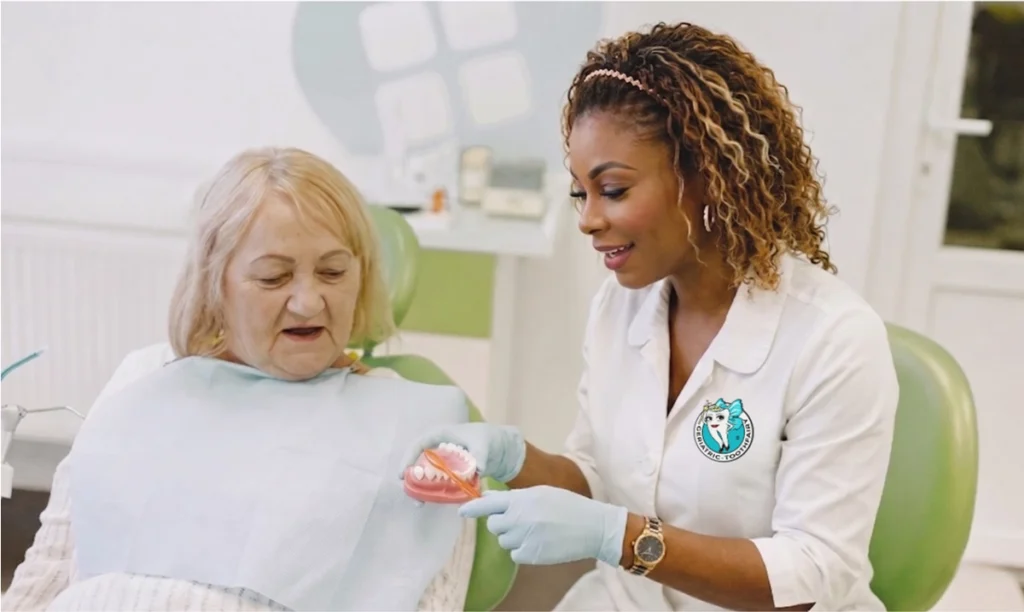
You remind them to brush. They look at you, confused. You try again, gently this time. They turn away.
If you are a caregiver, you know this moment. It is quiet, but it carries weight. Because deep down, you know skipping oral care today may lead to pain tomorrow.
This is where Dementia oral care becomes more than a routine. It becomes a daily act of protection. In this guide, we will walk through what is really happening and how you can support daily oral hygiene for dementia patients with confidence, patience, and care.
What Caregivers Are Really Facing Every Day
When dementia progresses, oral care often becomes one of the first daily challenges. A senior who once valued hygiene may now forget how to brush. Some resist. Others become anxious when you bring a toothbrush close to their face.
I remember working with a caregiver who told me, “She thinks I am trying to hurt her when I bring the toothbrush near.” That statement stays with me because it reminds us that behavior in dementia is not intentional. It is a response to confusion.
Caregivers often see food left in the mouth, strong odours, or bleeding gums. These are not small issues. These are early signs that geriatric oral care is not being met consistently.
Emotionally, it can feel overwhelming. You want to help, but every attempt feels like a struggle. And when oral care is skipped, even for a few days, the impact builds quickly.
Without proper Dementia dental care, small concerns can turn into infections, pain, and difficulty eating. What starts as resistance can lead to serious health complications.
Why Oral Care in Dementia Can’t Be Ignored
We are living in a time where dementia is increasing at a rapid pace. According to the World Health Organization, more than 55 million people worldwide are living with dementia, and nearly 10 million new cases are diagnosed every year.
At the same time, oral diseases affect around 3.5 billion people globally. Older adults are among the most vulnerable.
This means more families and care facilities are now responsible for Dementia oral care. And yet, many are not equipped with the right knowledge or tools.
The risks are real. Poor oral hygiene can lead to infections that do not stay in the mouth. Bacteria can travel into the lungs and cause aspiration pneumonia. This is one of the leading causes of hospitalization and death among older adults.
The Centers for Disease Control and Prevention reports that nearly one in five adults over 65 has untreated tooth decay. Gum disease is also more common in this age group and can worsen other health conditions.
And then there is nutrition. When the mouth hurts, eating becomes difficult. When eating becomes difficult, weight drops, and energy fades.
This is why geriatric dental hygiene services are not a luxury. They are essential.
Because oral health supports dignity. It supports comfort. And it supports life.
A Step-by-Step Approach to Better Dementia Oral Care
Improving daily oral hygiene for dementia patients does not require perfection. It requires consistency, understanding and small changes that make care easier.
Let’s walk through a simple approach that works in real life.
Build a Familiar Routine
Routine brings comfort. When oral care happens at the same time every day, it becomes more predictable.
Try brushing in the morning after breakfast and again before bedtime. Use the same steps each time. Over time, this consistency reduces confusion and builds trust.
Simplify Every Step
Dementia affects the ability to process multiple instructions. Keep things simple.
Instead of explaining the whole process, give one instruction at a time. Say, “Open your mouth” then pause. Then move to the next step.
This approach makes Dementia dental care less overwhelming for both the caregiver and the senior.
Use the Right Tools
The tools you use can make a big difference.
Soft toothbrushes are gentler on sensitive gums. Electric toothbrushes can help clean more effectively with less effort. Oral swabs can be useful when brushing feels too uncomfortable.
These small adjustments make daily oral hygiene for dementia patients more manageable.
Communicate with Calm and Reassurance
Tone matters. Body language matters.
Approach from the front. Make eye contact. Speak slowly and gently. Demonstrate brushing on yourself if needed.
The Alzheimer’s Association notes that up to 90 percent of individuals with dementia experience behavioral symptoms such as anxiety or agitation. Your calm presence can reduce that response.
Know When to Seek Professional Support
There will be times when home care is not enough.
If you notice swelling, bleeding, persistent bad breath, or difficulty eating, it is time to seek help. Providers offering geriatric dental hygiene services are trained to handle these situations with care and understanding.
Preventive visits can reduce the need for emergency treatment.
Simple Caregiver Tips That Actually Work
Let me share a few Caregiver tips for dementia oral hygiene that I have seen make a real difference.
- Use a calm and reassuring voice every time
- Approach from the front so the person can see you clearly
- Keep oral care part of a daily routine, not a rushed task
- Offer simple choices to give a sense of control
- Watch closely for signs of pain or discomfort
- Keep sessions short and positive
These are not complicated strategies. But when used consistently, they can transform how care feels for both of you.
Common Mistakes to Avoid in Dementia Dental Care
Sometimes, it is not what we do, but what we avoid that makes the biggest difference.
One common mistake is forcing oral care. This often increases fear and resistance. Instead, pause and try again later with a different approach.
Another mistake is skipping oral care after a difficult day. I understand how tiring caregiving can be. But consistency is what prevents problems from growing.
Ignoring early signs like bad breath or bleeding gums is another risk. These are signals that something is wrong.
Using complex instructions can also create confusion. Keep communication simple and clear.
And finally, delaying professional care can lead to emergencies that could have been prevented.
Each of these mistakes makes Dementia oral care more difficult over time. Avoiding them helps protect long-term health.
Oral Care Goes a Long Way
Caring for someone with dementia asks a lot of you. Physically, emotionally, and mentally.
Adding oral care to that responsibility can feel overwhelming. But small, consistent actions can prevent pain, protect health, and preserve dignity.
When we commit to better geriatric oral care, we are doing more than cleaning teeth. We are protecting comfort, nutrition, and quality of life.
If you want to feel more confident in your approach, consider learning more about structured care techniques or exploring professional geriatric dental hygiene services.
You do not have to do this alone. Support and education can make this journey easier, for you and for those you care for.