
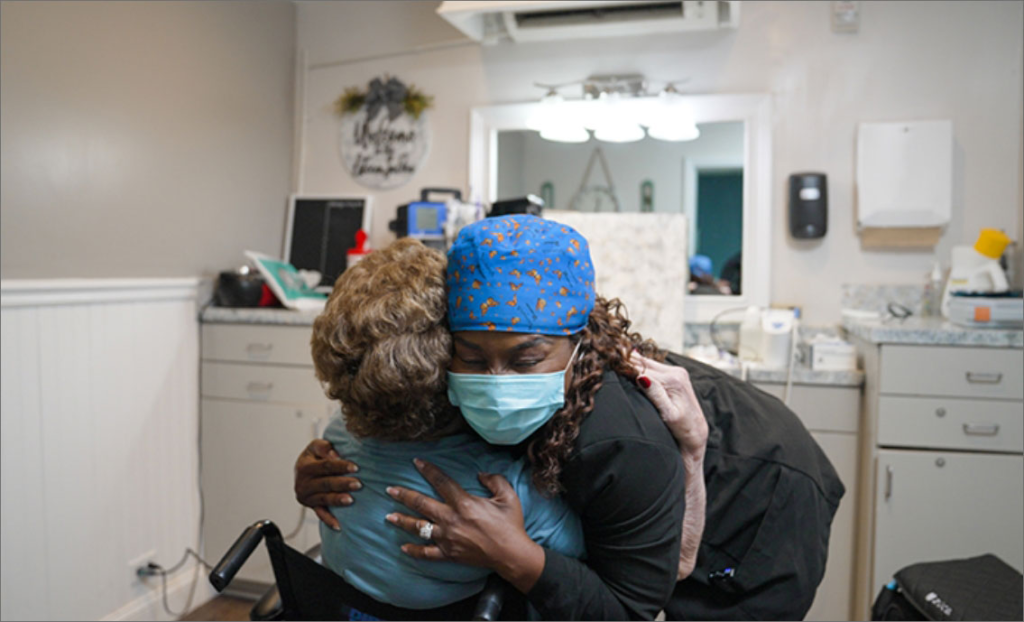
This time of year, I always find myself thinking about the older adults in our communities. The ones who built what we live inside of. The ones who showed up, sacrificed, raised families, built careers, and then one day found themselves in a nursing home or an assisted living community — waiting for care that was never going to come to them.
Senior dental care access is a crisis in this country. And the frustrating part is that it is a solvable one.
I want to talk about what is actually happening, why it matters as much as it does, and why the dental professionals reading this are the ones who can change it.
Why Senior Dental Care Access Has Become a Public Health Emergency
Here is the number that I cannot shake.
The majority of nursing home residents in the United States have untreated dental disease. The majority. These are not people who stopped caring about their health. These are people living in facilities that are required to provide dental care access — and failing to deliver it because the providers simply are not there.
The CDC oral health data is unambiguous on this point. Older adults carry a disproportionate burden of untreated oral disease, and for those in long-term care, the numbers are even worse than for the broader senior population.
The reasons are layered. Medicare offered almost no dental coverage for decades. Fixed incomes make out-of-pocket dental costs impossible for many seniors. Transportation to a dental office is a logistical challenge that nursing homes and families cannot always solve. And the standard dental office model was simply never built with these patients in mind.
The result is tens of millions of older adults living with preventable dental pain, infections, difficulty eating, and the health consequences that follow — aspiration pneumonia, worsened diabetes, cardiovascular complications, and malnutrition from not being able to chew food properly.
All of it preventable. Most of it invisible to the people who could fix it.
What Thirty Years in This Work Has Shown Me
I have been in more nursing home rooms than I can count.
I have sat with former teachers, war veterans, engineers, farmers, grandparents. People who lived full remarkable lives and ended up in a place where the dental provider never came. Not because the facility did not want one. Because in most communities, finding a dental professional willing and equipped to do this work is genuinely hard.
Miss Viola was eighty-seven. Former librarian. She told me about all the children she had helped find books over the years, and then she showed me a mouth full of pain she had been carrying quietly for two years. Two years. She had not wanted to be a burden.
That is what I think about when I think about senior dental care. Not statistics. Miss Viola. And the thousands of people like her in every community in this country, waiting for someone to show up.
The Gap Between What Seniors Need and What They Receive
Let me make this concrete for anyone who works in or around long-term care.
Facilities are legally required to provide residents access to dental care. But that requirement does not come with a provider attached. Most facilities are actively looking for dental professionals who will come to them, and coming up empty. They do not have the clinical staff or equipment in-house. They rely entirely on outside providers — and in many communities, those providers do not exist or have waiting lists months long.
That gap between what is required and what is actually happening is where seniors fall through. And it is where dental professionals who are willing to work differently can make an enormous difference.
Mobile Dentistry Is How We Close the Gap
The solution to this crisis is not a new law or a government program, though those would help. The most immediate solution is dental professionals who build portable and mobile practices and direct them toward the facilities and communities that need them most.
Mobile dentistry removes every barrier that stands between a vulnerable older adult and the care they need. It goes to the nursing home, to the assisted living facility, to the memory care unit, to the private home. It meets the patient exactly where they are, with professional clinical care delivered by someone trained to work with an aging population.
Every dental professional who builds this kind of practice is directly reducing the number of seniors living with unmet oral health needs in their community. That is not a small thing. It is the whole thing.
A Call to Dental Professionals Reading This
If you have been thinking about a different kind of practice — one with more freedom, more flexibility, and a clearer sense of mission — I want to ask you something directly.
Is there a nursing home in your community that has been trying to find a consistent dental provider? A memory care unit where residents have not been assessed in a year? A homebound patient population that cannot reach you?
Because if the answer is yes, and in most communities it is, then building a portable and mobile practice is the most direct path from that awareness to that action.
I am hosting a free live webinar on September 15th — Beyond the Dental Office — specifically designed for dental professionals who want to learn exactly how to do this. The market, the equipment, the facility relationships, the business model, the clinical approach. All of it, in one session, free.
You can register for the FREE Beyond the Dental Office Webinar on September 15th here. If senior dental care access is something that moves you, this is the most concrete step you can take today.
And if you want to talk through what this might look like in your specific community before then, book a 1:1 call with me. That conversation is always welcome.
The seniors in our communities built what we live inside of. The least we can do is show up for their mouths. Every mouth has a story. Every senior deserves to be heard.
Frequently Asked Questions
Why is senior dental care access such a significant problem?
Medicare offered little to no dental coverage for decades, fixed incomes limit out-of-pocket spending, transportation to dental offices is often impossible, and the traditional dental model was never designed to reach patients in nursing homes or homebound settings.
What percentage of nursing home residents have untreated dental disease?
According to CDC oral health data, the majority of nursing home residents have untreated dental disease, making it one of the most widespread and underaddressed health issues in long-term care.
How does poor oral health affect seniors specifically?
Untreated oral disease in seniors contributes to aspiration pneumonia, worsened diabetes management, cardiovascular complications, malnutrition from difficulty eating, and chronic pain that affects quality of life and participation in daily activities.
What is mobile dentistry and how does it help seniors?
Mobile dentistry brings portable dental equipment and professional care directly to patients in nursing homes, assisted living, memory care units, and private homes, removing every access barrier that prevents vulnerable seniors from receiving care.
How can dental professionals start serving senior populations?
The free Beyond the Dental Office Webinar on September 15th is specifically designed to walk dental professionals through how to build a portable and mobile practice focused on underserved senior populations.