5 Things I Look for Inside an Older Adult’s Mouth
People ask me sometimes what I’m actually doing when I lean in close during an assessment.
They see me gloved, in good light, working slowly and quietly around someone’s mouth. What they don’t always realize is that I’m reading something. Every older adult’s mouth tells a story. About their medications, their nutrition, whether they’re sleeping in their dentures, whether they’ve been in pain for a week or six months. Whether someone has been caring for them properly, or whether they have been quietly forgotten.
Thirty years in this work teaches you to listen to what the mouth is saying. This month, for National Dental Hygiene Month, I want to share five of the most important things I look for. Not because you need to become a clinician. Because the more caregivers, family members, and healthcare workers understand what matters inside the aging mouth, the sooner someone speaks up when something is wrong.
5 Things I Look for Inside an Older Adult’s Mouth
1. The condition of the gum tissue
I want to know what color it is and how it responds to gentle touch. Healthy gum tissue is a quiet, coral pink. Tissue that is red, puffy, or that bleeds easily is inflamed, and that inflammation is not a cosmetic issue. Gum disease, periodontal disease, is a chronic infection. It keeps the body in a low state of ongoing inflammation and it has been linked to heart disease, difficulty managing blood sugar in diabetes, and aspiration pneumonia.
In older adults, this tends to progress quietly. They may not feel the bleeding because sensation decreases with age. They may not mention it because they assume it is normal. It is not.
2. Whether there is a coated or dry tongue
I look at the tongue every single assessment. A healthy tongue should be moist, pink, and move freely. What I often find in older adults is a thick coating, a white or yellowish film that tells me about hydration, medication side effects, and oral hygiene that is not reaching past the teeth.
A dry, sticky tongue is one of the clearest signs of xerostomia, dry mouth caused most often by medications. And dry mouth is not just uncomfortable. Without adequate saliva, the mouth loses its natural defense against decay and infection. Cavities appear faster. Fungal infections take hold. Swallowing becomes harder and aspiration risk goes up.
I have sat with patients who had been living with severe dry mouth for months. Nobody had looked. Nobody had asked. Once we identified it and got the right products and protocols in place, the change in how they ate, talked, and felt was significant.
3. The state of any existing teeth
Not just whether teeth are present, but what they look like. I am checking for root surface decay, which is extremely common in older adults because gum recession exposes the root and root surfaces are much softer than enamel. I am checking for fractures, especially when a patient has been grinding or clenching, which happens more than people realize in older adults dealing with pain or disrupted sleep. I am looking for dark spots that were not there on a previous visit.
Root decay can progress quickly, especially in a dry mouth. And because it forms at the gumline it is easy to miss if no one is specifically looking for it. By the time there is pain, the damage is often already significant.
4. The condition of any dentures or appliances
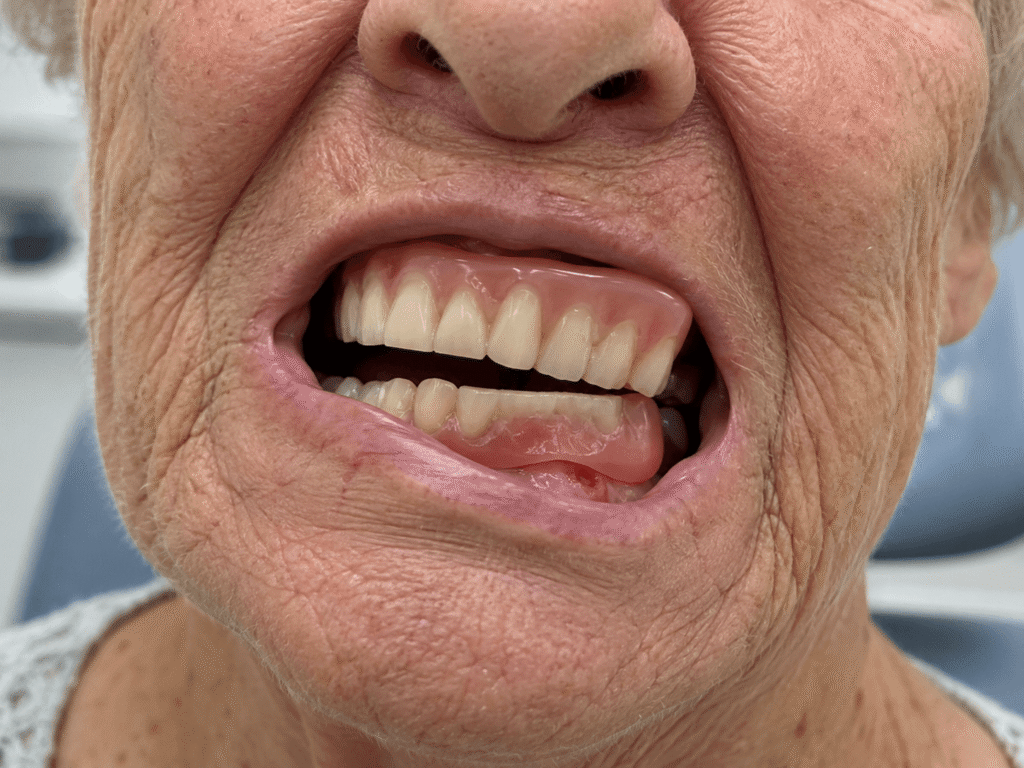
If the person wears dentures, I want to see them in and out. In, so I can check how they are fitting and whether there are pressure spots or areas of irritation. Out, so I can see what is actually on the surface.
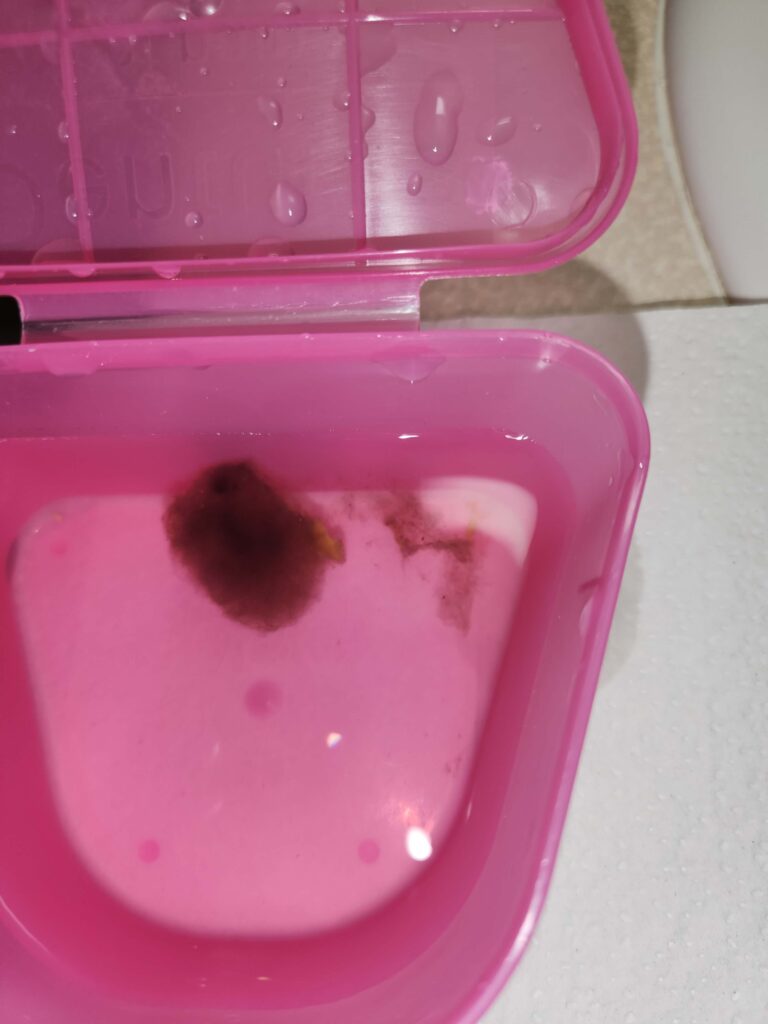
A denture can look clean to the naked eye and still harbor biofilm on the microscopic level. Biofilm on dentures includes Candida, Streptococcus, Staphylococcus, and other organisms that do not disappear with rinsing. They require mechanical removal every day and professional cleaning on a regular basis. Most older adults were never taught this. Most caregivers were never taught this either.
What I find underneath pulled dentures is often the most important thing I find in an entire assessment. Tissue that is red and inflamed underneath a denture that “looks fine” from the outside is called denture stomatitis. It is caused by Candida overgrowth. It is painful. And it is entirely treatable once it is identified.
5. Any sores, lesions, or changes that have been there a while
This is the one I take most seriously.
Any sore or lesion inside the mouth that has not resolved within two weeks needs professional evaluation. Full stop. Oral cancer does not always announce itself loudly. It often starts as a small white patch, a red area, a sore that the patient or their family has been watching and waiting on. The five-year survival rate for oral cancer caught early is dramatically better than for oral cancer caught late. And catching it early requires someone to look.
Older adults are at higher risk, particularly those with a history of tobacco use, heavy alcohol use, and certain viral exposures. But oral cancer does not only affect people with those histories. It requires attention regardless of background.
What This Means for Caregivers and Families
I am not asking you to become a dental professional. What I am asking is this: be willing to look.
If you are caring for an older adult, there are things you can notice without any clinical training. Is their tongue dry? Are their gums red or puffy? Are they flinching when they eat certain foods? Have they started avoiding hard or chewy foods? Is there a sore you have been watching for more than two weeks?
Any of those is a reason to make a call. To a dentist, to a dental hygienist, or to a provider who does mobile or portable dental care and can come to the patient directly.
Mrs. Hazel was eighty-nine when I met her. Her family had noticed she was eating less but put it down to age. When I did her assessment, I found a significant area of tissue damage under her lower denture that had been rubbing a sore for what looked like several weeks. She had not said a word about it because, in her words, “I did not want to make a fuss.”
We treated her. Within a few weeks she was eating normally again.
She had been living with that because nobody had looked. Older mouths matter. What is inside them matters. And when we pay attention, we protect so much more than teeth.
All month, I am focusing on exactly these conversations: what lives inside the aging mouth, and what happens when we finally start paying attention to it.
October Is National Dental Hygiene Month
If you are a dental professional who wants to go further in this work, the Geriatric Oral Care Certification is built for exactly this. It trains you to do what I described in this post, clinically and with confidence, in any setting you walk into.
You can learn more about the certification here.
And if you have questions or want to talk through what this kind of work looks like in practice, book a 1:1 call with me.
Every mouth has a story. Learn to read it.
Frequently Asked Questions
What are the most important things to look for in an older adult’s mouth?
Gum tissue color and condition, tongue moisture and coating, the state of existing teeth including root surfaces, the condition of dentures and the tissue underneath them, and any sores or lesions that have been present for more than two weeks.
Why do older adults get more cavities even with good hygiene habits?
Gum recession exposes root surfaces, which are softer than enamel and decay more quickly. Dry mouth from medications removes the saliva that naturally protects teeth. Both of these change the dental risk profile significantly, even for someone who has always had good hygiene.
What is denture stomatitis?
Denture stomatitis is inflammation of the tissue under a denture, most often caused by Candida overgrowth on the denture surface. The tissue looks red and irritated under the denture. It is treatable but requires proper cleaning protocols and in many cases antifungal treatment.
How do I know if an older adult’s mouth needs professional attention?
Look for gums that bleed easily, persistent dry mouth, sores that have not healed in two weeks, increasing difficulty eating or chewing, or any visible change in the mouth that was not there before. Any of these warrants a call to a dental professional.
Can oral cancer occur in older adults who never smoked?
Yes. While tobacco and alcohol use increase risk, oral cancer can affect people without those histories. Any sore or patch in the mouth that has not resolved within two weeks should be evaluated by a dental or medical professional regardless of background.